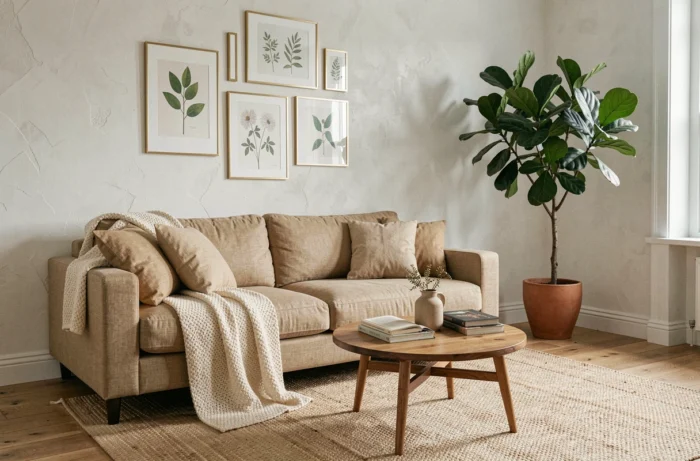
A sofa inherited from a grandmother, a dresser picked up at a flea market, shelves put up ten years ago: most homes take shape around what people already own. Creating an interior that reflects your personality doesn’t necessarily mean replacing all your furniture.
Since August 18, 2025, retailers with at least 200 m² of sales floor dedicated to furniture have been required to offer take-back solutions for used furniture. This makes it easier both to sort unwanted items and to find refurbished second-hand furniture.
Decorating with existing furniture: repaint, reupholster, rearrange
Before looking for anything to buy, it’s worth taking a fresh look at what you already have. A solid oak sideboard from the 1980s can be transformed with two coats of matte paint and brushed brass handles. The cost stays low, and the piece retains its original sturdiness.
Reupholstering a seat costs less than buying a new armchair and lets you choose a fabric you won’t find in stores. Independent upholsterers often provide quotes based on photos, making it easier to compare prices. One practical limitation: some old foam is too saggy to simply cover, so the padding has to be replaced, adding to the cost.
Rearranging furniture is the only free change that genuinely alters how a space feels. Moving a sofa a few inches away from the wall creates a different flow and makes the room feel more spacious. The resources on home decor from Maisons et Conseils cover several layouts suited to rooms of different sizes.
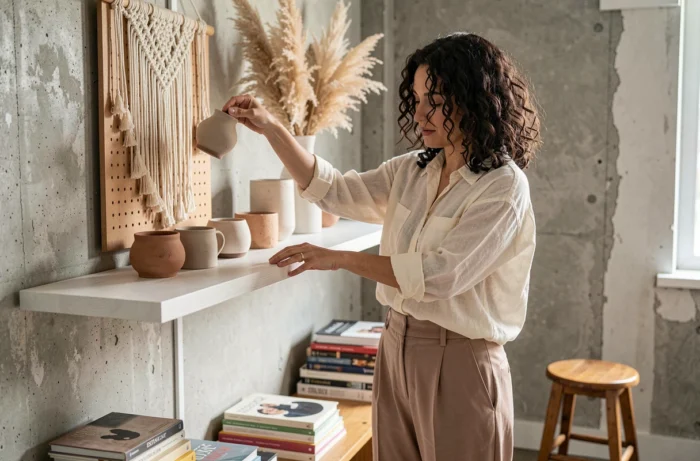
Second-hand and reuse: find characterful furniture without buying new
The AGEC law established a fund dedicated to reuse and repurposing in the furniture sector. In practice, this means that the range of refurbished furniture grows every year, supported by both brick-and-mortar organizations (reuse centers, associations) and specialist online platforms.
Reuse isn’t limited to buying second-hand from private sellers. Some retailers now offer returned or display furniture at reduced prices, with quality checks. For products covered by the furniture EPR scheme, available information may include the proportion of recycled materials, recyclability, and the presence of hazardous substances, helping you compare two seemingly identical dressers.
Practical limitations of second-hand home decor
You can’t always find what you need second-hand when you need it. Standard pieces (modular shelving, rectangular coffee tables) are widely available. Unusual sizes and shapes (deep corner units, custom bookcases) are harder to find and require patience—or a visit to an artisan workshop.
- Solid wood furniture holds up well to restoration (sanding, staining, varnishing), while melamine-coated particleboard deteriorates quickly once its surface is damaged.
- When buying upholstered seating second-hand, check the internal frame: broken springs or stretched webbing can make repairs more expensive than expected.
- Vintage light fixtures often need to be brought up to current electrical standards before use, an expense to remember when budgeting.
Colors and materials: personalize a room’s atmosphere without tearing everything apart
Choosing colors is still the quickest way to transform an interior. Painting two walls in a bold shade is enough to draw the eye and add character to a neutral room. Test a paint sample on a one-meter-square patch for two or three days in both natural and artificial light to avoid unpleasant surprises once the whole can has been applied.
Textiles (curtains, cushions, throws, rugs) let you introduce textures and patterns without making a permanent commitment. A thick wool rug laid over cold tile can change how a living room feels just as much as new flooring, at a fraction of the cost.
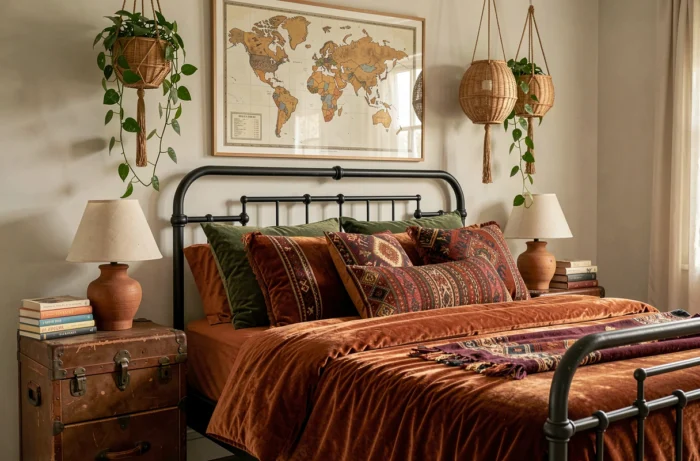
Mixing different decor styles without creating visual clutter
A consistent color thread brings together furniture in different styles. You can mix a Scandinavian chair with an Art Deco sideboard as long as they share a common color (black legs, light wood, gold-toned metal). The same principle applies to materials: pairing rattan with black metal creates a crisp contrast that gives the room structure.
The practical rule is simple: limit the palette to three dominant materials per room. Beyond that, the space can feel cluttered, even if every object looks beautiful on its own.
Interior lighting: the detail most decor schemes overlook
A single central ceiling light flattens the room and casts unflattering shadows on the furniture. Adding multiple light sources (a reading lamp, wall sconce, subtle string lights) creates different moods and makes every corner of the room usable in the evening.
- A floor lamp placed behind an armchair casts an indirect glow that makes the room look larger.
- Warm-temperature bulbs (around 2,700 K) work well in living spaces, while cooler light is better suited to a home office or work surface.
- Replacing a yellowed lampshade with a light linen one improves the quality of a lamp’s light without changing its base.
Lighting is one of the least expensive things to change and has one of the biggest impacts on the everyday feel of a home. Before repainting or replacing a piece of furniture, moving a lamp or adding another light source often delivers an immediate result, with no drilling or major expense.