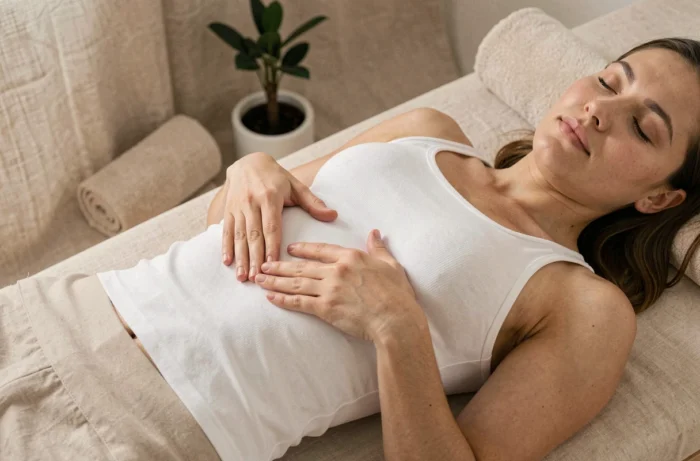
Abdominal massage regularly comes up in discussions about weight loss. The question is worth examining in measurable terms: what effects does this practice have on bowel transit and abdominal fat, and are these two factors really connected?
Bowel transit and abdominal fat: two distinct factors
| Factor | Effect of abdominal massage | Level of evidence |
|---|---|---|
| Constipation / bowel movement frequency | Improvement reported in several reviews | Moderate (heterogeneous studies, short follow-up) |
| Laxative use | No reduction observed despite improved bowel transit | Low |
| Reduction in local fat mass | No conclusive evidence | None |
| Waist circumference | Possible decrease, due to reduced digestive bloating rather than fat loss | Low (often confused with fat loss) |
This table highlights the gap between what abdominal massage actually changes and what it is credited with. Bowel transit can improve without any reduction in abdominal fat. These two effects involve different physiological pathways.
A less bloated stomach after a series of massages can create the visual impression of slimming down. Measuring waist circumference at that point can be misleading: the reduction reflects less bloating, not fat loss. Data on reductions in waist circumference come from studies on physical activity, not massage, illustrating why this shortcut is deceptive.
Anyone considering an abdominal slimming massage for weight loss should understand the difference between these mechanisms before expecting results in terms of body shape.
Abdominal massage and constipation: what recent reviews show
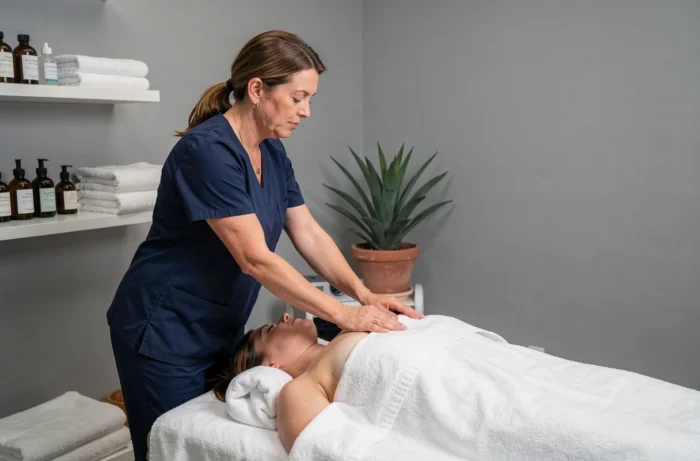
Reviews published through 2025 report improvements in bowel movement frequency and digestive comfort among patients with functional constipation. Abdominal massage mechanically moves intestinal contents, which may temporarily speed up peristalsis.
Two caveats limit the significance of these findings:
- Laxative use does not decrease despite subjective improvements in bowel transit, suggesting partial relief rather than resolution of the problem
- Digestive effects vary across the groups studied (hospital patients, older adults, healthy adults). A benefit observed in one group does not automatically apply to another
- In hospital settings, the variety of protocols and lack of systematic monitoring for adverse effects make it impossible to draw conclusions about the comparative effectiveness or safety of massage versus conventional treatments
Abdominal massage therefore remains a possible complement to constipation treatment, not a substitute. It may provide genuine digestive comfort. In terms of weight, it does not affect any of the mechanisms involved in lipolysis.
Localized fat reduction through massage: why the concept doesn’t hold up
Localized fat reduction (known as spot reduction in exercise physiology) is a concept that has been repeatedly disproven. No external mechanical stimulation triggers significant lipolysis in the targeted area. The release of fatty acids stored in adipocytes depends on systemic hormonal signals, not local pressure.
When the body draws on its fat stores, it does so throughout the body, according to a genetically determined pattern. Massaging one area intensively does not change the order in which fat is mobilized.
What mechanical massage actually does to tissues
Repeated pressure on the abdomen stimulates superficial blood circulation and local lymphatic drainage. These effects may temporarily reduce water retention and ease the feeling of heaviness. Any reduction in volume is due to fluid loss, not fat loss, and it reverses within a few hours.
Some massage treatments at beauty salons combine deep pressure, heat, and cosmetic products. The smoothing or firming effect perceived after a session comes from skin stimulation and topical hydration. None of these elements reaches deep adipose tissue.
Abdominal self-massage for digestive comfort: technique and limitations
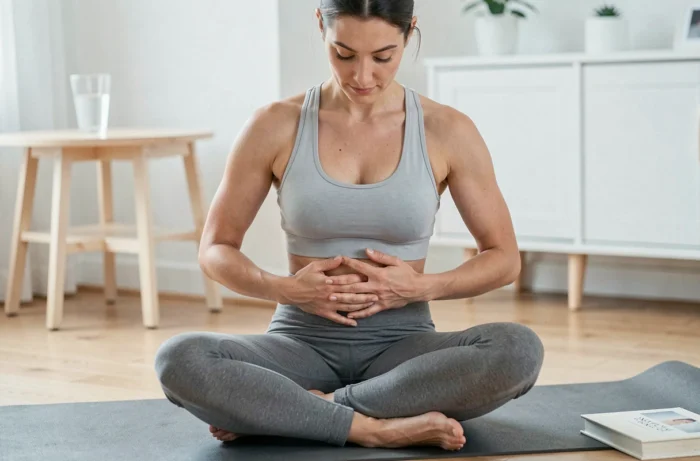
If the goal is to improve digestive comfort rather than lose fat, abdominal self-massage can be a useful daily practice. The best-documented technique follows the path of the colon:
- Start in the lower right abdomen (the caecum area), move up toward the right ribs, across horizontally below the navel, then down along the left side—making an inverted U shape in a clockwise direction
- Apply moderate pressure with the palm or flat fingers, without pressing down abruptly
- Ideally, practice in the morning on an empty stomach or at least two hours after a meal, for five to ten minutes
Consistency matters more than intensity. Pressing too hard on a sensitive abdomen can cause pain or worsen existing discomfort. People with abdominal conditions (hernias, intestinal inflammation, recent surgery) should consult a healthcare professional before trying this.
What self-massage cannot replace
Adequate fiber intake, proper hydration, and regular physical activity remain the three pillars of healthy bowel function. Abdominal massage cannot make up for a low-fiber diet or a sedentary lifestyle. It can complement these habits, but it cannot replace them.
Confusing a flat stomach with a healthy one leads people to overestimate the benefits of massage and underestimate the factors that actually determine body composition. A less bloated abdomen after self-massage reflects improved digestive comfort. Reducing abdominal fat, on the other hand, requires a sustained calorie deficit combined with physical activity that engages the metabolism as a whole.


