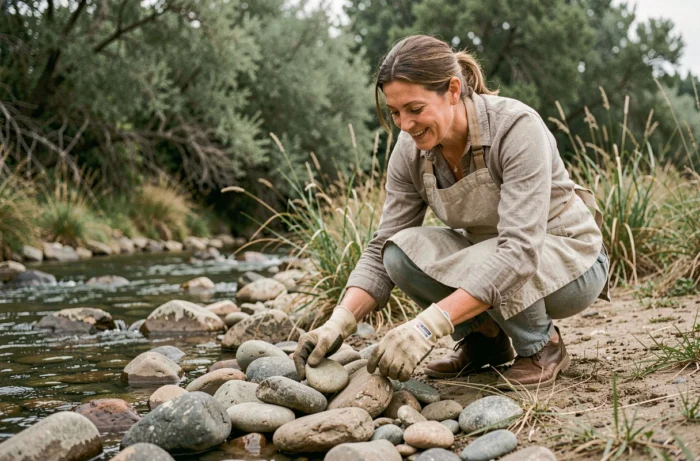
Getting stones for free to dress up a garden border, flower bed or path is an appealing idea. Hundreds of free-giveaway listings from individuals appear on resale platforms. But between spotting a pile of rubble and getting those stones into your garden, the process can cost far more than expected in fuel, time and physical effort.
The real cost of collecting free stones
Have you noticed that listings for stones to give away almost always say “collection only”? That detail changes everything. The material may be free, but transport, loading and wear and tear on your vehicle are not.
Take a batch of limestone spotted about 40 kilometres away. The round trip uses fuel. If the stones are heavy, you may need to rent a trailer or ask someone to help. Then there’s the time involved: finding the listing, getting in touch, travelling, loading and unloading. Over half a day, the total cost often exceeds that of buying recycled aggregates from a local recycling centre.
Before jumping on a free listing, compare the total cost of collecting the stones with the price of recycled material sold nearby. Recycling centres process mineral construction waste into reusable aggregates. It isn’t always free, but for a path or drainage area, the price is still modest, and delivery may be available. Free stones are only a real saving if the journey is short and the quantity is limited.
To search for free stones on Jardino, you can browse listings sorted by location, making it easier to check the distance before committing.
Construction-site stones and reuse networks: an overlooked source
Demolition and landscaping projects generate considerable quantities of natural stone. Limestone, granite, sandstone and lava stone are among the materials targeted by reuse initiatives under the EPR (extended producer responsibility) scheme for construction products and materials.
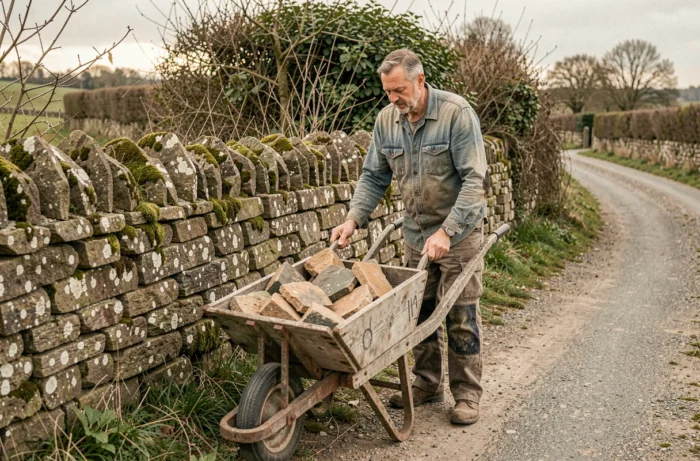
In practice, contacting a demolition company or local landscaper before a site is cleared can open up a genuine opportunity to collect stones. The company saves on landfill disposal costs, while you get raw material that may be of excellent quality.
How to spot these opportunities
- Keep an eye on demolition permits posted by your local council: they can point to sites where materials will soon be available.
- Call local construction-material reuse platforms. Some bring together listings for stone and sorted rubble.
- Contact landscapers directly when they remove low walls, borders or rockeries during garden renovations.
Always call before setting out. Arrangements vary from site to site: some projects allow small quantities to be collected, while others do not. Confirming the collection terms will save you a wasted trip.
Free listings from individuals: where to look and what to check
Classified-ad platforms are still the most common place to look. On Le Bon Coin, the “Garden & Plants” category features hundreds of listings for stones to give away. Local Facebook groups focused on gardening or DIY also regularly post offers.
Two precautions are worth taking. First, check what kind of stone it is before loading it. A pile of rubble mixed with concrete or plaster is nothing like natural stone suitable for decoration. Second, estimate the total weight of the lot. A few decorative stones will fit in a car boot. A dismantled low wall can weigh several hundred kilos and requires a suitable vehicle.
Sites such as 2ememain.be (Belgium) and Marketplace’s “free” sections work in much the same way. Filter by distance to keep your search within a reasonable radius.
Collecting stones in natural areas: what the law says
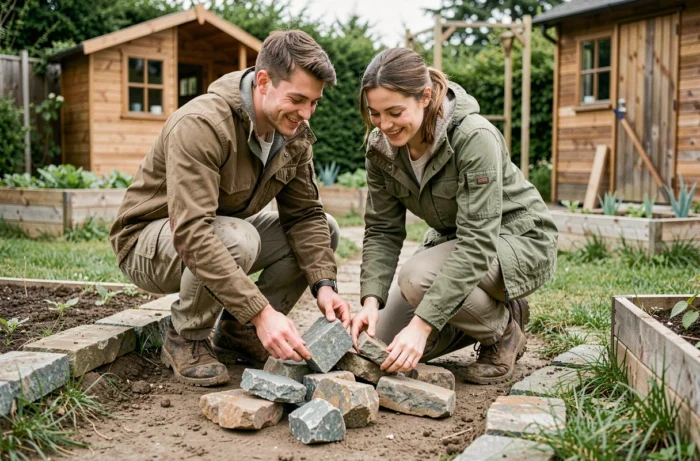
Picking up a few pebbles by a river or collecting stones from a field may seem harmless. In reality, the Environmental Code protects certain sites of geological interest and may prohibit the removal of minerals or formations there.
The issue is not limited to national parks. Protected areas can also be found on the outskirts of towns, along waterways or on cliffs. Collecting stones from private land requires the owner’s permission, even if the land appears abandoned.
Precautions to take before collecting
- Check the site’s status with your local council or intermunicipal authority. Protected sites are not always clearly signposted.
- Get written permission from the owner if the land is private.
- Avoid riverbeds: removing materials from public waterways requires administrative authorisation.
These rules are not intended to discourage reuse. They help prevent damage to fragile environments and protect you from an unexpected fine.
Free stone or recycled aggregate: choose based on your project
Not every garden project calls for the same approach. For a decorative low wall or a rockery, reclaimed stones in varied shapes add a natural character that is hard to replicate with industrial materials.
For a path, the base of a flower bed or drainage, recycled aggregates from processing centres often offer better value for money than collecting stones from scattered sources. The material is graded, available in larger quantities and can be delivered.
Your choice depends on three factors: the distance to the collection point, the quantity required and the intended use. Collecting a few dozen kilos locally for a border can be worthwhile. Filling a trailer to cover a large area with free stones rarely is, especially if a recycling centre nearby sells aggregate for just a few euros per tonne.
The most useful first step is to list the quantity and type of stone you need before looking at any listings. This will help you avoid unnecessary trips and find the source that best suits your project, whether it’s free or not.


