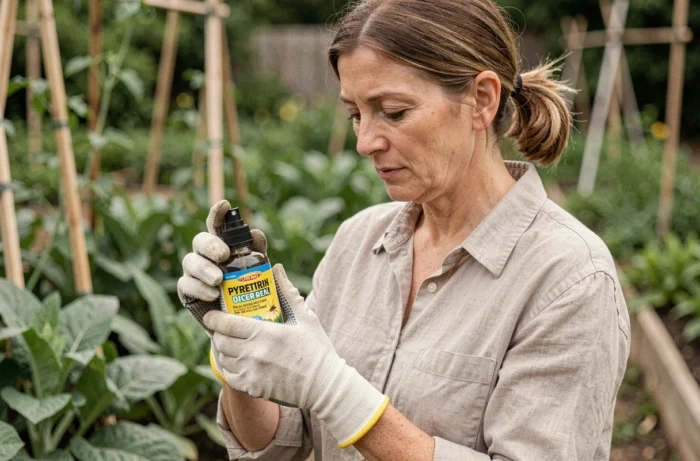
Natural pyrethrins extracted from Dalmatian chrysanthemum and synthetic pyrethroids share the same neurotoxic mechanism: blocking voltage-gated sodium channels in nerve cells. In insects, the lethal dose is reached quickly.
In humans, acute toxicity remains low at concentrations used in the home. However, the collective expert review published by Inserm in 2021 found a strong presumption of a link between pyrethroids and neurodevelopmental disorders in children. This finding changes how professionals and individuals alike should assess the risk.
Urinary pyrethroid metabolites: what 3-PBA really measures
Measuring 3-PBA (3-phenoxybenzoic acid) in urine is the most widely used biomarker for assessing pyrethroid exposure. It indicates recent exposure, over a period of a few days, because the elimination half-life is short.
This marker has two major technical limitations. 3-PBA is a metabolite shared by several pyrethroids (deltamethrin, permethrin, cypermethrin), so an elevated result does not identify the source substance. There is also no agreed reference value that would allow an individual health risk to be inferred from a single test.
A one-off urine test does not measure cumulative exposure. To assess the danger of pyrethrum to humans meaningfully, repeated samples would need to be collected over several weeks, alongside an inventory of household exposure sources. In practice, this protocol is reserved for epidemiological cohorts.
Total pyrethroid exposure: beyond mosquito spray
Limiting risk assessment to the aerosol used in the living room is a common methodological mistake. Pyrethroids are found in a wide range of products, and a family’s actual exposure is the sum of these sources.

- Agricultural residues on non-organic fruit and vegetables: several pyrethroids are among the active substances detected on fruit and vegetable crops.
- Textile treatments: some workwear, treated mosquito nets and upholstery fabrics contain permethrin as an insect repellent, with possible skin transfer during wear or prolonged contact.
- Veterinary antiparasitic products: spot-on treatments and collars for dogs and cats release pyrethroids on contact, exposing household members through skin contact when petting them.
- Professional building treatments: termite or bed bug control uses concentrated formulations whose residues persist on treated surfaces.
We recommend making a complete inventory of these sources before concluding that a household has low exposure. The cumulative effect of daily, low-level exposures can far exceed the dose attributed to a single electric diffuser plugged in overnight.
Pyrethroids and pregnancy: Inserm’s strong presumption
In its 2021 collective expert review, Inserm classified the link between prenatal pyrethroid exposure and neuropsychological or motor development disorders as having a strong presumption. This classification is based on converging findings from several cohort studies, including the Breton PELAGIE cohort.
PELAGIE data report associations between certain maternal urinary metabolites and behaviors observed in children (attention disorders, motor difficulties). These findings do not make it possible to attribute a specific disorder to a particular exposure or predict the risk for an individual child. They are statistical associations, not a causal diagnosis.
This distinction is essential when communicating with patients and families. Reducing avoidable exposure during pregnancy remains the priority recommendation, without causing alarm about an inevitable effect. In practice, this means avoiding indoor insecticide sprays, choosing untreated mosquito nets and checking the ingredients in antiparasitic products used on household pets.
Precautions for use: read the safety data sheet, not the marketing
Every commercial formulation containing pyrethrum or pyrethroids has its own safety data sheet. Precautions for a household aerosol cannot be applied to an emulsifiable concentrate intended for treating commercial premises.

Always check the following points on the safety data sheet:
- Active ingredient concentration and type of pyrethroid (natural pyrethrins, permethrin, deltamethrin, etc.): toxicity varies by molecule.
- Recommended application method: room ventilation, glove use and re-entry interval after treatment.
- Whether piperonyl butoxide (PBO) is present, a synergist that increases the mixture’s effective toxicity.
Regulatory classifications provide useful additional information. In its 2020 re-evaluation proposal, Health Canada classified pyrethrins as a possible human carcinogen and potential endocrine disruptor. In vitro genotoxicity tests were negative, which adds nuance to the overall risk profile.
Marketing for many products emphasizes the “natural” origin of plant-based pyrethrum. This botanical origin does not change its neurotoxic mode of action or the need to follow dosage instructions and directions for use. A natural pyrethrum insecticide used incorrectly in an enclosed space can pose a greater exposure risk than a synthetic pyrethroid applied according to the instructions.
Risk management rests on three measures: limit how often products are used, ventilate treated spaces and, above all, map all household exposure sources before deciding that an individual product “poses no danger.” The silent accumulation of agricultural, textile and veterinary residues alongside household use is the real blind spot in protecting families’ health.