
A full wardrobe and yet nothing to wear: the problem rarely comes down to a lack of clothes. It’s more often the result of scattered purchases, driven by trends that are misunderstood or only worn for one season. Defining your everyday style takes fewer new pieces than you might think, as long as you choose items that work together and stand the test of time.
Alterations and repairs: the real way to keep up with fashion trends without overconsuming
Have you ever noticed how a jacket that’s slightly too loose or a poorly adjusted hem can throw off an entire look? Fit matters more than a trendy print. Before buying something new, a visit to a tailor can turn a forgotten garment into a wardrobe staple.
Shortening wide-leg trousers so they break just right over your shoes, taking in a flowing dress at the waist, replacing a blazer’s buttons with more contemporary ones: these alterations cost a fraction of the price of a new garment. A well-planned alteration updates your look without buying anything new.
Repairs play a complementary role. Restitching a lining, darning a knit, gluing a sole back on: these fixes extend the life of a piece you love wearing. The European Union is also moving in this direction, with recent rules that discourage the destruction of unsold textiles and encourage reuse rather than recycling alone. This framework clearly distinguishes giving a garment a second life (wearing it again, reselling it or donating it) from processing it at the end of its life.
Explore fashion at Femmes Du Monde to find pieces that lend themselves to this approach, with simple cuts and fabrics that can last for several seasons.

Build a stylish wardrobe with fewer pieces: the core wardrobe method
The idea isn’t to give up on trends, but to limit purchases to items that fit into an already solid foundation. This foundation is a small group of neutral, well-cut clothes that work together.
Identify your style-defining basics
A well-fitting pair of dark-wash jeans, a structured blazer, a heavyweight cotton crew-neck T-shirt, a pair of understated flats: four pieces that work with most seasonal trends. The goal is to wear each piece in at least three different outfits.
Why use this as a rule? Because clothes worn only once a month tend to end up forgotten at the back of the wardrobe. You can test a piece’s versatility in your mind before buying it: What can I wear it with tomorrow, next week, or in a different setting?
Add one or two trend-led pieces each season
Once your core wardrobe is in place, just one statement piece is enough to refresh the whole look. This season, bold colors—deep green, rich red and icy blue—are dominating collections. A single jacket or accessory in one of these shades can change the feel of an entire outfit.
The trap is buying five trendy pieces that only work with one another. Every new addition should work with at least two core wardrobe basics.
- A colorful knit sweater can be worn with dark-wash jeans in the morning and under a blazer at the office.
- A structured midi skirt can replace jeans on days when you want a more polished silhouette, paired with the same flats.
- A medium-sized bag in a seasonal color goes with every outfit without requiring a perfectly matched look.

Secondhand and durable pieces: define your style without increasing your footprint
Secondhand shopping is no longer limited to vintage thrift stores. Resale platforms now offer recent pieces, sometimes worn just once, for a fraction of their original price. For short-lived fashion trends—a bold print or an extreme cut, for example—buying secondhand means you don’t pay full price for a garment with a short lifespan.
For core wardrobe basics, the logic is reversed: investing in a well-made new piece makes sense because you’ll wear it dozens of times. The cost per wear of a wool blazer worn for two years is still lower than that of a synthetic blazer replaced every season.
How to spot a piece that will last
A few practical clues can help you assess how long a garment will last before you buy it:
- The inside seams are neat and even, with no loose threads. Clean finishing on the inside is a sign of careful construction.
- The fabric springs back into shape when you scrunch it in your hand. Cotton or wool that stays creased will wear out quickly.
- The buttons are cross-stitched with a shank (a small gap between the button and the fabric). A button sewn flat is more likely to come off.
- The label lists mostly natural fibers. A blend with a small percentage of synthetic fibers for stretch is still fine.
Accessories and seasonal colors: the accents that transform an everyday look
Accessories are the most affordable way to keep up with fashion trends without changing your main wardrobe. A wide belt over a neutral blazer, a scarf in a seasonal shade, statement earrings: these details are enough to give an outfit a contemporary feel.
One well-chosen accessory makes more of an impact than three mediocre trend pieces. The eye is drawn first to contrast and unexpected details. A scarf tied around your wrist, a brooch on a shirt collar, a structured hat: each touch creates a focal point.
When it comes to color, the neutral tones in your core wardrobe—white, black, beige, gray and navy—work with any pop of color. There’s no need to buy an emerald-green coat if you only like the color for three months. Trying a trendy color in an accessory keeps the risk and cost down.
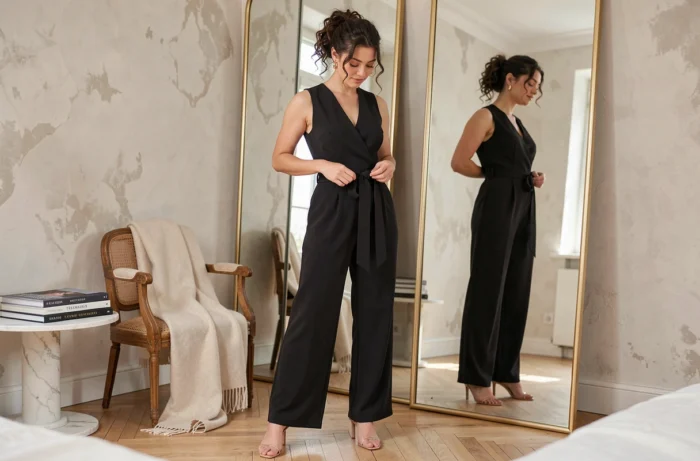
Defining your everyday style isn’t about accumulating more clothes. A streamlined wardrobe built around solid basics, refreshed each season with one or two carefully chosen pieces and maintained through alterations, creates more cohesive outfits than an overflowing closet. The next trend will pass; style lasts.


