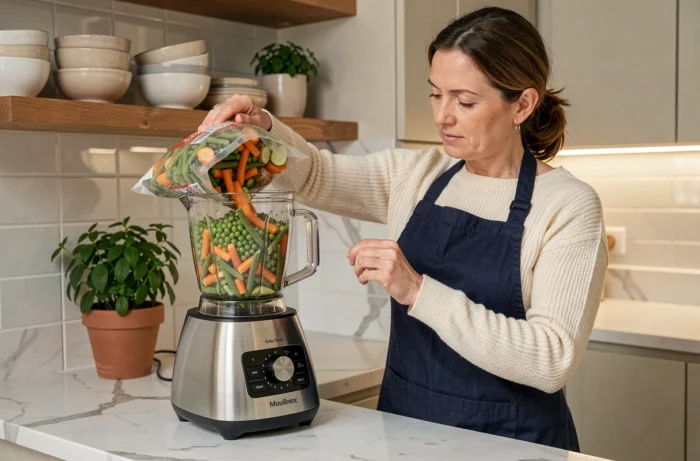
A bag of frozen vegetables, a Moulinex Easy Soup on the countertop, and soup is ready in less than half an hour. The idea sounds simple, but a few technical details can make the difference between a successful velvety soup and one that’s watery or undercooked. It all comes down to how much liquid you add, which program you choose, and how the frozen vegetables release water as they cook.
Water released by frozen vegetables: the trap that dilutes your soup
Have you ever ended up with soup that was too thin, even though you used your usual amount of water? Frozen vegetables are often the reason. Unlike fresh vegetables, they contain water trapped in the form of ice crystals.
As they cook, this water melts and adds to the liquid already in the bowl. The result: a total volume greater than you expected. To compensate, reduce the added liquid by about a quarter compared with a recipe designed for fresh vegetables.
Always stay between the minimum and maximum fill marks inside the Easy Soup bowl. The minimum mark protects the heating element, while the maximum prevents the contents from overflowing as steam builds up. With frozen vegetables, start close to the minimum mark; you can always thin the soup after cooking if it’s too thick.
A detailed guide explains how to use frozen vegetables with the Moulinex Easy Soup, taking these specific measuring requirements into account.
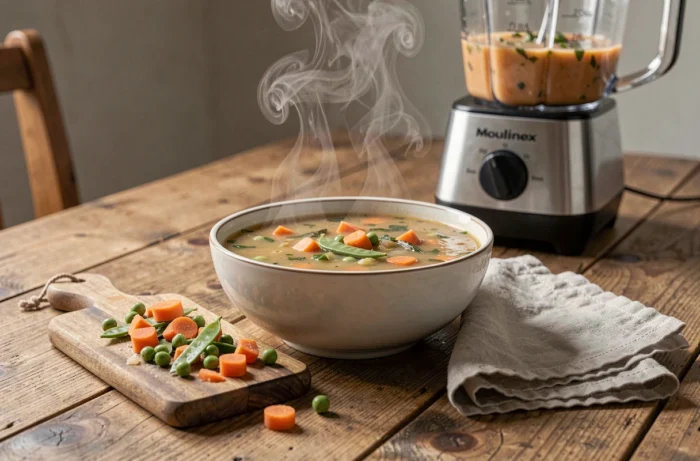
Plain frozen vegetables or seasoned mixes: what changes in the bowl
The contents of the bag have a direct impact on the final flavor. A plain mix (carrots, leeks, zucchini with nothing added) gives you complete control over the seasoning. Adjust the salt, stock, and fat to suit your preferences.
Pre-seasoned mixes, on the other hand, often contain salt and sometimes flavorings or oil. Adding a stock cube on top can make the soup too salty. Before adding anything to the Easy Soup, read the ingredient list on the bag.
- Plain vegetables: add half a stock cube and a knob of butter or a splash of cream. You control how much salt and fat goes in.
- Seasoned mixes: taste the soup at the end of cooking before adding salt. A few turns of the pepper mill and some fresh herbs are often all you need.
- Mixes containing starchy ingredients (potatoes, pasta): the soup will thicken naturally. Reduce the starting amount of liquid further to prevent a pasty texture after blending.
Choosing the right bag matters just as much as the recipe itself. A bag of plain vegetables is the most versatile option for making different soups throughout the week.
Moulinex Easy Soup programs: when to blend and when to leave chunks
The Easy Soup offers several programs, depending on the exact model. Two are standard: the smooth soup setting and the chunky soup setting. The right choice depends on the texture you want, as well as the type of vegetables you’re using.
Smooth soup with frozen vegetables
The smooth soup program cooks the ingredients, then blends them finely at the end of the cycle. Frozen vegetables are particularly well suited to velvety soups: freezing softens their texture, making them easier to blend than crisp fresh vegetables.
For a smooth, even soup, break apart any pieces stuck together in the bag before adding them to the bowl. Compact clumps cook unevenly, leaving hard pieces in the finished soup.
Chunky soup with frozen vegetables
This program cooks without blending, or with only partial blending. The result depends largely on the size of the pieces in the bag. Uniformly diced vegetables make a pleasant, rustic soup. Pieces of very different sizes produce an uneven mix, with some falling apart while others remain firm.
Check the exact model of your Easy Soup before following a recipe you find online. Available programs, cooking times, and bowl capacities vary from one model to another. Your appliance’s manual is the reliable source for cooking times and quantities.
Should you thaw vegetables before adding them to the Easy Soup?
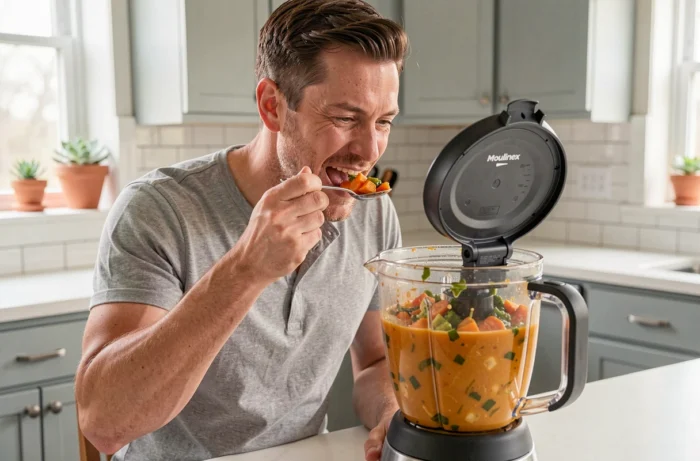
The short answer: in most cases, no. Adding frozen vegetables straight to the bowl works, as long as you follow the fill marks. The Easy Soup’s cooking cycle is designed to bring the ingredients up to temperature gradually.
There are two situations where it’s worth thawing the vegetables first:
- Very compact clumps of vegetables that could stop the blades from turning freely during blending.
- Vegetables with a high water content (spinach, tomatoes), which may release too much liquid and exceed the maximum fill level during cooking.
- Dense vegetables (butternut squash, large pieces of celeriac) if your model has a short cycle: a quick rinse under warm water speeds up cooking without fully thawing them.
In all other cases, you can transfer the vegetables straight from the freezer to the heated blender bowl. The vegetables have already been partially cooked by the blanching process used before freezing, which reduces the cooking time needed.
Seasoning at the end of cooking: the simple step that makes all the difference
Adding salt, pepper, cream, or herbs before cooking seems logical. In practice, boiling concentrates the flavors. Stock that seems perfectly seasoned at the start can end up too salty once the soup is ready.
Always season after the cooking cycle, once the soup has reached its final texture and volume. A spoonful of crème fraîche, a drizzle of olive oil, a few basil or coriander leaves: these additions turn a basic velvety soup into a delicious homemade meal.
The Easy Soup doesn’t replace flavor. It takes care of cooking and blending. The finishing touch—the one that makes you want another bowl—comes after the beep.


