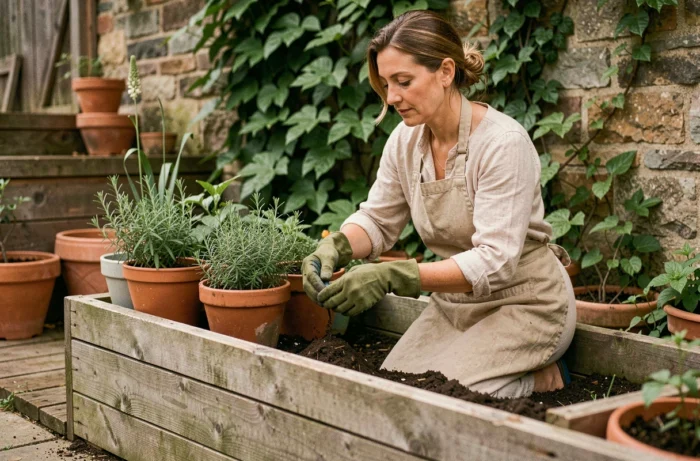
Designing a garden means balancing soil conditions, available water and sunlight before choosing a single plant or paving material. Since September 1, 2024, a new health framework has governed the domestic use of collected rainwater, notably requiring the rainwater system to be kept separate from the drinking water supply. This regulatory requirement changes how we approach outdoor design: it starts with water management, not furniture.
Permeable materials and garden water management
Before laying a patio or planning a path, check the local urban planning scheme (PLU) for your municipality. Some regulations require property owners to limit impermeable surfaces, encourage water infiltration or temporarily store runoff. Stone paving laid on a sand bed, stabilized gravel or grass-jointed pavers meet these requirements while creating a polished look.
Watering restrictions, set by prefectural order, vary depending on drought conditions and location. A garden designed around regular watering can become difficult to manage within just a few weeks. The official VigiEau service lets you check the situation in your municipality before planning your planting. Designing from the outset with permeable materials and shaded areas reduces reliance on mains water.
For more on DIY and decorating techniques suited to every type of outdoor project, visit: https://www.brico-deco-jardin.net.
Plants suited to the local climate and a resilient garden
Plant selection has a greater impact on a garden’s long-term resilience than any other decorative feature. Choosing plants suited to the local climate (lavender, yarrow, ornamental grasses, shrubby salvias) helps avoid costly replacements after a summer of watering restrictions. Once established, these species can tolerate prolonged dry spells without supplemental watering.
Spontaneous vegetation is an often-overlooked asset. Recent publications on pesticide-free gardening highlight its benefits for biodiversity. Leaving some areas unmown or allowing local plants to grow between paving stones or at the foot of a low wall adds texture to the garden with no extra effort or cost.
A simple principle works well for structuring flower beds: use three height layers. The low layer (ground covers, creeping thyme) protects the soil from evaporation. The middle layer (perennials, grasses) adds volume. The tall layer (evergreen shrubs, small trees) provides shade that keeps the ground cooler in summer.
- Drought-tolerant ground covers: sedum, lippia, blue fescue. They reduce weeding and help retain soil moisture.
- Long-flowering perennials: gaura, echinacea, catmint. They add color without frequent watering.
- Evergreen shrubs: dwarf pittosporum, common rosemary, California lilac. They give the garden structure all year round.
Rainwater harvesting for garden watering
A rainwater collector connected to a downspout can meet a significant share of an ornamental garden’s watering needs. Installation is a straightforward DIY project: all you need to get started is a filter collector, an above-ground or underground tank, and a tap.
Collected rainwater is not drinking water. It may contain contaminants from the roof, such as moss or material residues. Its use is limited to garden watering and certain non-food-related domestic uses, regulated since September 1, 2024. If both systems are present in the home, the rainwater network must remain strictly separate from the drinking water supply.
To improve efficiency, a drip irrigation system connected to the tank delivers water directly to the base of plants. A sufficiently thick layer of organic mulch (wood chips, straw, cocoa shells) completes the setup by significantly reducing soil evaporation.
Outdoor wood decor and DIY furniture
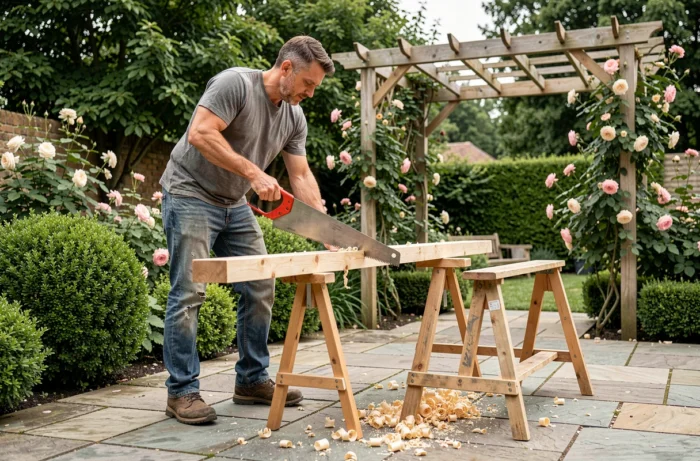
Wood remains the most versatile material for decorating a garden without hiring a professional. Pallets, leftover boards and logs can be turned into planters, benches or privacy screens using basic tools (saw, drill-driver, sander).
The type of wood determines how long a project will last. Pressure-treated pine can withstand several years outdoors. Douglas fir and larch are naturally durable and turn gray without deteriorating. Exotic hardwoods last longer but raise sourcing concerns. Wood rated for at least Use Class 3 is suitable for outdoor use when it is not in constant contact with the ground.
- Raised wooden planters: they define the space, make maintenance easier and let you control the quality of the growing medium.
- Open-slatted privacy screen: it creates privacy without blocking airflow or making the area too dark.
- Pallet table or bench: an accessible project requiring few tools; protect the wood with an exterior-grade stain.
For pots and containers, terracotta and stoneware regulate temperature better than plastic. In full sun, a dark plastic pot can overheat plant roots. Pots made from porous materials, on the other hand, maintain a more stable temperature and allow the growing medium to breathe.
Colors and lighting to enhance your outdoor space
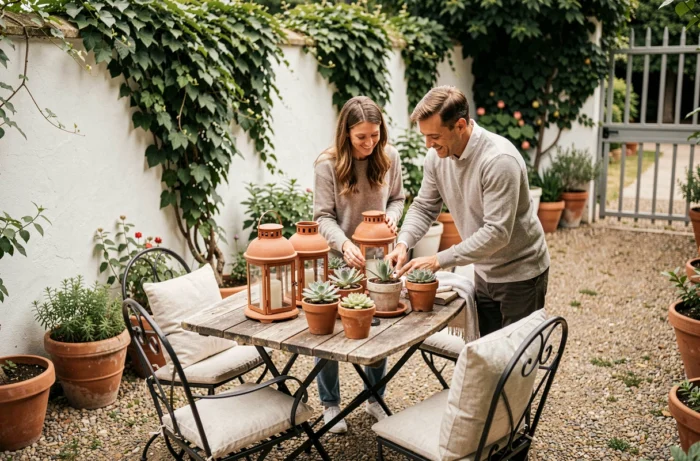
Garden decor is about more than plants. The colors of furniture, pots and accessories create a cohesive look. A practical rule: limit your palette to two or three dominant colors to avoid a cluttered effect. Neutral tones (gray, beige, off-white) for furniture let the flowers take center stage.
Low-voltage solar lighting along a path or at the base of a flower bed extends the use of the garden into the evening without wiring or electricity consumption. Solar LED stake lights can be placed directly in the ground. Solar string lights hung between two anchor points define a dining area or a relaxing corner without major installation work.
A resilient, attractive garden doesn’t require a huge budget. It comes down to choices made in advance: materials that let water pass through, plants that don’t need intensive watering, and durable decorative features made from materials suited to outdoor use. Check the PLU, consult VigiEau and choose local species: these three simple steps can help you avoid costly rework after the first dry summer.