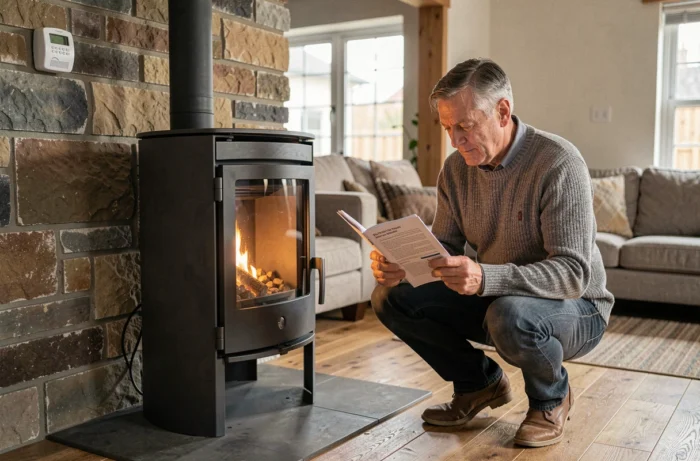
Every pellet stove produces carbon monoxide. Burning wood pellets generates CO during every cycle, including when the appliance is operating correctly. The difference between safe operation and a dangerous situation lies in how the flue gases are vented—not in the absence of CO in the firebox.
Pressure switch and flue gas extractor: the limits of built-in safety features
Pellet stoves are equipped with a differential pressure switch that monitors the negative pressure in the flue system. If the flue becomes blocked or the extractor weakens, the pressure switch cuts off the pellet feed. This device is reliable within its scope, but it does not detect a leak at a poorly sealed connection.
A deteriorated door seal, a loose flue tee or a crack in a rigid flue pipe can allow CO to enter the room without causing the system’s overall negative pressure to drop enough to trigger an alarm. The absence of an error message on the stove’s display therefore does not guarantee that the installation is airtight.
The flue gas extractor is an electromechanical component that depends on electricity. During a power outage, the fan stops while pellets are still burning in the burn pot. Most electronic control boards manage a shutdown cycle, but if the power supply is cut abruptly and for an extended period, flue gases may flow back into the room. After an outage, any smell of smoke means you should ventilate the room and not restart the appliance until the cause of the backflow has been identified.
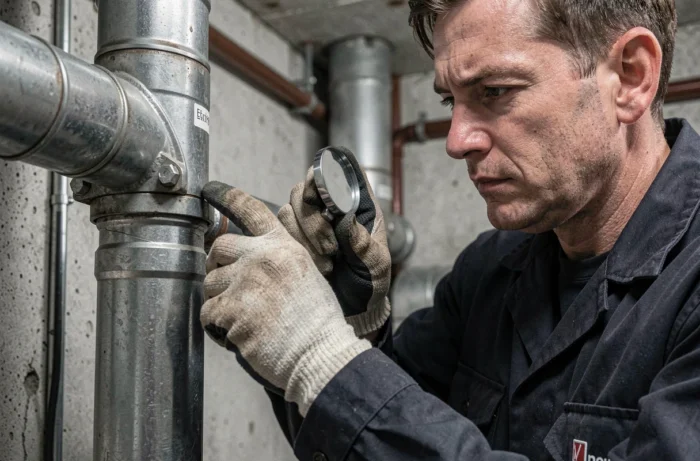
We find that installers sometimes underestimate the importance of airtight connections in areas that are out of sight (ceiling penetrations, attic spaces). Whether a pellet stove can emit carbon monoxide depends as much on the quality of the flue as on the stove itself.
Storing pellets in an enclosed space: an overlooked source of CO
The risk of carbon monoxide is not limited to a stove in operation. Large quantities of stored wood pellets release CO through natural oxidation, without combustion. This chemical process, linked to the breakdown of the wood’s resinous fatty acids, occurs at room temperature in any confined space.
A fabric pellet silo in a poorly ventilated cellar or a utility room without low and high ventilation grilles creates the conditions for a gradual buildup. Concentrations remain low in open spaces, but in an enclosed area of just a few cubic metres, they can reach problematic levels.
- Store pellets in a room separate from living areas, with permanent natural ventilation (low and high grilles that cannot be blocked).
- Avoid windowless cellars without air circulation, even when storing just a few bags.
- Ventilate the room before entering if pellets have been stored there for several weeks without the room being opened.
This risk is separate from the one associated with the stove and also applies to homes where the appliance is connected to a remote silo with an auger feed.
Flue sweeping and regulations applicable to pellet stoves
Decree No. 2023-641 of 20 July 2023 harmonised the national rules for flue sweeping. For flues serving individual wood-burning heating appliances, the minimum frequency is one sweep every twelve months. This rule came into force on 1 October 2023.
One technical point is often overlooked: local requirements may be stricter. Some departmental health regulations or municipal orders require two sweeps a year, including one during the heating season. Checking the rules that apply in your municipality helps avoid non-compliance that could have consequences in the event of a claim, as the insurer may cite a lack of maintenance.
Mechanical sweeping of the flue does not replace annual maintenance of the stove itself. Cleaning the burn pot, inspecting the heat exchanger and checking the seals are part of routine maintenance. A clean flue connected to a dirty stove does not protect against CO.
Carbon monoxide detector: what it really detects
A household CO detector does not work like a smoke detector. Its alarm threshold depends on both the concentration and the duration of exposure. Depending on the standard applied, the alarm may not sound immediately at low concentrations, even when CO is present in the room.
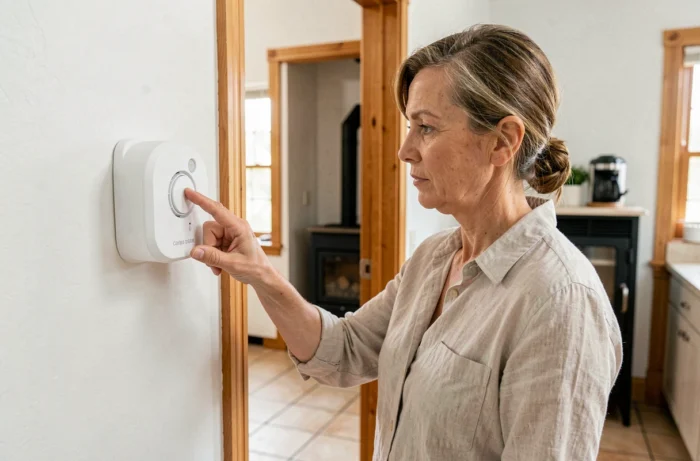
This stepped response means that a CO detector is an additional safety measure, not a diagnostic tool. It cannot verify that a flue is airtight or that a stove is working properly. We recommend placing it at breathing height in the room where the stove is located, not in the adjacent hallway.
- Replace the sensor according to the service life specified by the manufacturer (usually a few years).
- Never install the detector directly above the stove or near a ventilation outlet, as this could distort the reading.
- Test the detector manually at the start of each heating season.
A correctly installed pellet stove connected to an airtight flue and maintained at the intervals required by regulations presents a low risk. CO becomes a real danger when one of these links fails: a faulty seal, a cracked flue, missed sweeping, or pellets stored in a confined space. Every part of the system, from the silo to the roof terminal, should be checked annually.


