
In chrononutrition, dinner is the lightest meal of the day. The principle is based on chronobiology: the body does not metabolize nutrients in the same way at every hour of the day. In the evening, insulin secretion decreases, metabolism slows down, and the ability to oxidize fat declines. A meal that is too heavy or too late creates an excess that the body stores rather than uses.
Nighttime blood sugar and fat oxidation: how dinner time makes a difference
Most guides to chrononutrition focus on what’s on your plate. But the time you eat dinner affects your metabolic response, regardless of what the meal contains.
A randomized crossover trial published in 2020 (Gu et al.) compared the same dinner eaten at 6 p.m. and 10 p.m. by 20 healthy adults. The later meal was associated with higher nighttime blood sugar and lower fat oxidation, with no measurable difference in sleep quality. You may still feel comfortable digestively even as your metabolism slows down.
This finding highlights an often-overlooked point: putting together a suitable chrononutrition dinner isn’t enough if you eat too close to bedtime. The time between finishing dinner and falling asleep matters just as much as your food choices.
This suggests having dinner at least a few hours before bed, taking your own chronotype into account. Someone who goes to sleep at 11 p.m. and someone who goes to bed at 1 a.m. shouldn’t eat dinner at the same time, even if they’re following the same plan.
What to eat for dinner on a chrononutrition plan: lean protein and vegetables
In Dr. Alain Delabos’s approach, dinner plays a supporting role. Most of your calories come from breakfast (fat, cheese) and lunch (protein-rich foods, starches). In the evening, the goal is to meet your remaining needs without overloading your digestive system.
Protein to choose in the evening
Dinner protein should be lean and easy to digest. White fish (cod, pollock, sole) and seafood are the options most in keeping with the principles of chrononutrition. Skinless poultry (chicken breast, turkey) is also suitable.
Red meat and processed meats, on the other hand, are reserved for lunch. Their longer digestion time and saturated fat content make them unsuitable for dinner, when digestive enzymes are less active.
Vegetables: the foundation of your plate
Vegetables should make up most of your dinner plate. They add volume, fiber and micronutrients while keeping calories low. Common choices include:
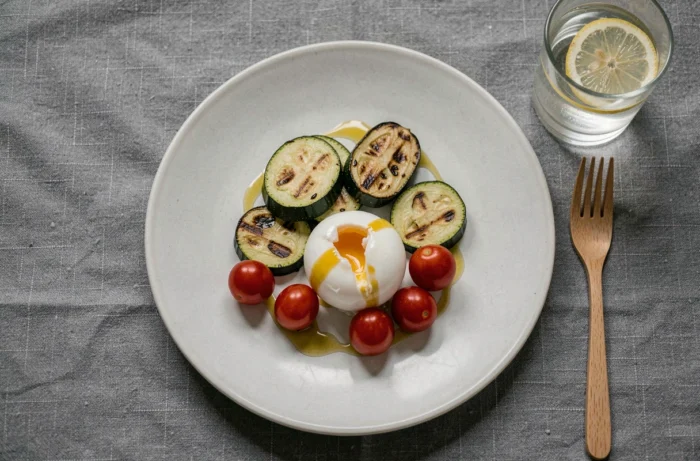
- Zucchini, green beans, spinach and broccoli: low-calorie vegetables that digest quickly and are easy to steam or lightly sauté
- Mixed salads (lamb’s lettuce, arugula, endive) with a small amount of olive oil dressing for minimal fat
- Grilled mushrooms and bell peppers: alternatives that add variety in texture without making the meal too heavy
Foods to avoid in the evening on a chrononutrition plan
Some foods commonly eaten at a traditional dinner are specifically excluded from this approach. Heavy starches (pasta, rice, white bread) are not recommended at dinner because they cause a blood sugar spike at a time when the body is less able to manage glucose.
Dairy products, a staple of a chrononutrition breakfast, don’t belong in the evening meal. Cheese in particular, which is high in fat and salt, slows nighttime digestion.
Fresh fruit is a common source of questions. In strict chrononutrition, it is generally reserved for an afternoon snack (around 4–5 p.m.), when the afternoon cortisol peak helps the body assimilate it. In the evening, its fructose content may contribute to an undesirable rise in blood sugar before sleep. Some practitioners allow a low-sugar fruit (a few strawberries, half a grapefruit), but the basic rule is to leave fruit off the dinner menu.

Sample dinner and variations for the week
A chrononutrition dinner centers on two components: a source of lean protein and a generous serving of vegetables. The overall portion is moderate compared with lunch.
- Steamed cod fillet with julienned zucchini and a squeeze of lemon
- Endive salad with peeled shrimp, a few walnuts and a light rapeseed oil dressing
- Grilled chicken breast with garlic sautéed broccoli and a green vegetable soup to start
- Fresh salmon tartare on a bed of lamb’s lettuce and cucumber, seasoned with dill and lime juice
Monotony is the main obstacle to sticking with a chrononutrition plan over time. Varying your cooking methods (steaming, baking in parchment, grilling on a plancha) and spices is more helpful than trying lots of complicated recipes.
Chrononutrition in the evening and weight management: one tool among many
Eating a smaller dinner won’t lead to weight loss on its own. Chrononutrition works as a complete system: the benefits come from a balanced distribution across all four meals, not from lightening just one meal. A perfectly balanced dinner won’t make up for an unstructured lunch or skipping breakfast.
Results also depend on your overall lifestyle. Physical activity, sleep quality and stress levels all affect how your body uses the nutrients you consume in the evening. A review published in Nutrients in 2025 (Reytor-González et al.) also notes that evidence on meal timing and sleep remains mixed, with no universally ideal time.
Chrononutrition works best when dinner is treated as the final part of a structured day of eating, not as a standalone meal to optimize. Light, protein-rich, centered on vegetables and eaten well before bedtime: these four criteria sum up the key points to remember.


