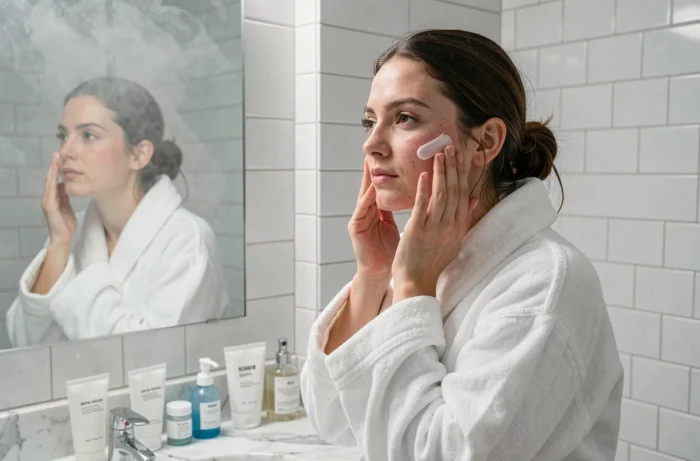
A spot appears on your chin, then another on your forehead. The first instinct is often to buy the first acne cream you find at the pharmacy. The problem is that not all skin reacts the same way, and the wrong product can make things worse instead of calming them down. To find a face cream for spots that’s suitable for daily use, you first need to understand what’s happening beneath the skin’s surface.
Sebum, inflammation and bacteria: what really causes spots
Before choosing a skincare product, you need to identify what’s causing the problem. A spot isn’t just a clogged pore: it’s a chain reaction involving several factors at once.
Sebum, produced by the sebaceous glands, normally helps protect the skin. When production goes into overdrive (due to hormones, stress or heat), sebum builds up in the pore. Dead skin cells join it and form a plug. Bacteria naturally present on the skin then multiply in this enclosed environment, triggering inflammation: redness, swelling and pain.
Have you noticed that your spots always appear in the same places? The T-zone (forehead, nose and chin) has more sebaceous glands, which explains why it’s more prone to breakouts. This matters when choosing a product: a cream applied all over the face should be lightweight, while a targeted treatment can contain a higher concentration of active ingredients.
Finding an effective cream for facial spots therefore means knowing what type of blemishes you have: blackheads (open comedones), microcysts (closed comedones beneath the skin) or red, inflamed spots. Each calls for a different skincare approach.
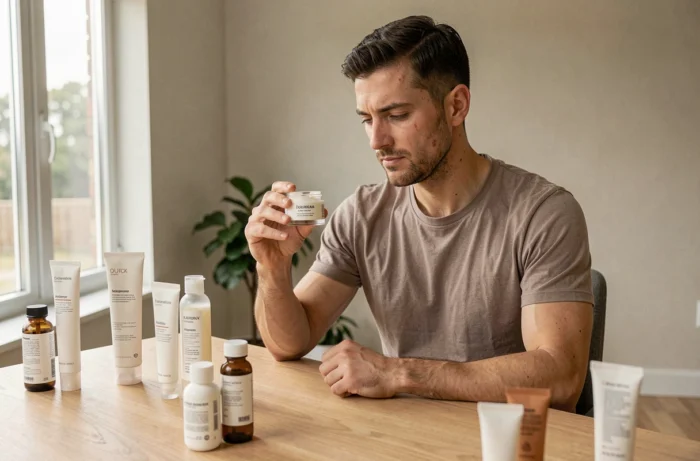
Salicylic acid, niacinamide, zinc: acne-fighting ingredients to look for on the label
Every tube promises clear skin, but the difference lies in the ingredient list. Three groups of active ingredients have proven effective in daily skincare for acne-prone skin.
Salicylic acid, the go-to exfoliant
This is a BHA (beta-hydroxy acid) that dissolves in oil. In practical terms, it penetrates the pore to dislodge the sebum and dead skin cells clogging it. Salicylic acid works directly where spots form. It’s found in many anti-blemish creams and gels sold in pharmacies.
Niacinamide, the all-round regulator
Also known as vitamin B3, niacinamide reduces sebum production and helps limit inflammation. It also fades the marks left behind by spots. Its advantage: it’s well tolerated, even by sensitive or surface-dehydrated skin.
Zinc, the gentle anti-inflammatory
Zinc (in the form of gluconate or PCA) is often found in skincare products for oily skin. It slows bacterial growth and reduces redness. Zinc is particularly suitable for combination skin that can’t tolerate overly potent active ingredients.
Other ingredients (azelaic acid, low-dose retinol, gluconolactone) can complement these three mainstays, but not all are suitable for daily use without guidance from a dermatologist.
Skincare texture and acne-prone skin type: the factor many people overlook
The right active ingredient in the wrong texture can make things worse. This is often underestimated compared with the choice of ingredient itself.
- Oily, acne-prone skin needs a fluid, gel or gel-cream texture. Rich formulas containing occlusive fats (shea butter, coconut oil) may clog pores further. Look for “non-comedogenic” on the packaging.
- Combination skin, oily in the T-zone but dry on the cheeks, can tolerate a lightweight cream applied all over, with a more concentrated spot treatment on blemish-prone areas.
- Sensitive skin prone to spots needs fragrance-free formulas without denatured alcohol. Alcohol dries out the skin’s surface, prompting it to produce even more sebum in response.
Moisturizing acne-prone skin isn’t contradictory. Dehydrated skin compensates by producing excess sebum. Skipping moisturizer makes the cycle worse. The best approach: use a lightweight moisturizer formulated for blemish-prone skin, morning and evening.
Daily anti-blemish routine: mistakes that undermine your skincare
Applying the right cream isn’t enough if the rest of your routine works against it. A few common pitfalls come up time and again.
Using too many active ingredients increases the risk of irritation. An exfoliating cleanser in the morning, a glycolic acid serum, then a retinol cream in the evening: your skin is exposed to too many harsh ingredients at once. Information sheets for some dermatological treatments (such as adapalene) warn that combining them with other drying skincare products can worsen irritation.
Impatience can also lead you to switch products too soon. An anti-blemish cream needs several weeks of regular use before it shows visible results. Switching between three different products over the course of a month doesn’t give any of them time to work.
One last often-overlooked point: sun protection. Some acne-fighting ingredients (salicylic acid, retinol) make skin more sensitive to UV rays. Without sunscreen suited to acne-prone skin, marks left by spots can darken and become harder to fade.
When cream is no longer enough: knowing when to seek medical advice
Daily skincare products can help with mild to moderate blemishes. But not all forms of acne can be treated with over-the-counter products. Deep, painful spots that leave scars or persist after several months of a well-followed routine warrant a visit to a dermatologist.
Acne severity determines the type of treatment, not just your skin type. A dermatologist can prescribe higher-strength active ingredients or oral treatments that aren’t available in cosmetic products. For women who are pregnant or planning a pregnancy, some common ingredients such as topical retinoids (tretinoin, adapalene, isotretinoin) are contraindicated: check this before buying any product.
Choosing a daily acne cream comes down to three practical decisions: identify the right active ingredients for your type of blemishes, choose a texture that suits your skin, and resist the temptation to overdo it. The most effective skincare product is the one you use regularly on properly cleansed and moisturized skin, without overloading your routine.